Hydrolate of thyme (Thymus vulgaris)
Thyme hydrolate is obtained from garden thyme, Thymus vulgaris, of the Lamiaceae family (the mint family). Lavender, rosemary, mint and basil belong to the same family. In Bulgarian the word for thyme is used for many species of the genus Thymus. Dozens of wild thyme species grow in Bulgaria, and people gather them as a herb. They differ from garden thyme in composition and scent, so always check the botanical name on the label when you buy. Garden thyme is native to the western Mediterranean: Spain, southern France and Italy. Today it is grown in many countries with warm, sunny summers, Bulgaria among them.
Garden thyme is a low perennial subshrub, usually 15 to 30 cm tall. The lower part of the stems is woody, while the upper twigs are thin and covered with fine hairs. The leaves are small, narrow and grey green, with edges curled downwards. The aromatic substances collect in tiny glands on their surface. The plant flowers from May to July with small white, pale pink or light lilac flowers clustered at the tips of the twigs. Bees visit the flowers eagerly. Thyme likes dry, stony, chalky soils and plenty of sun.
The raw material for the hydrolate is the flowering herb, that is, the aerial part of the plant with its leaves and flowers. It is harvested during flowering, when the leaves hold the most aromatic substances. The herb is steam distilled. The steam passes through the plant material and carries away the volatile aromatic substances. After cooling, two layers form in the separating vessel: The essential oil and the aromatic water. This water is the hydrolate. Small amounts of the aromatic substances of thyme stay dissolved in it, mainly those that dissolve more readily in water. The hydrolate is therefore not diluted essential oil but a separate product with its own scent and its own composition.
The composition of thyme depends on the chemotype, that is, the variety of the plant that forms different main aromatic substances. In garden thyme the best known types are those with thymol and carvacrol, but there are also types with linalool, geraniol and other substances. The phenols thymol and carvacrol dissolve in water more readily than many other constituents of essential oils. That is why thyme hydrolate has a stronger and sharper smell than most hydrolates.
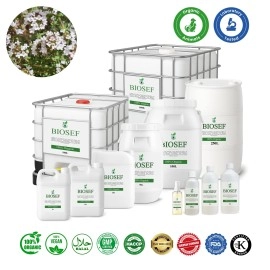
Our thyme hydrolate comes from Bulgaria and is obtained by steam distillation of the flowering herb. We offer it natural and organic. The hydrolate is liquid and is declared as yellowish to dark brown in colour. The scent is fresh and rich: Herbal, with woody notes. The hydrolate contains no colourants. As a water based product it needs more careful storage than essential oil, in a tightly closed container, in a dark and cool place.
Aromatherapy
In aromatherapy thyme hydrolate is used for its fresh herbal scent. It is much milder than the essential oil because it contains only small amounts of aromatic substances. It is therefore used neat, without dilution in a carrier oil. Most often it is poured into a spray bottle and sprayed into the air of a room. It suits freshening a kitchen, bathroom, hallway and other rooms where a clean herbal smell is wanted. Some ultrasonic diffusers allow a hydrolate to be used instead of water, but this must be stated in the device instructions. The hydrolate is also used in water for compresses and in warm bath water. In massage it is used to moisten towels or to refresh the skin after the massage. The scent of thyme is strong for a hydrolate and appeals to people who like herbal and spicy scents. It blends well with rosemary, lavender, sage and mint hydrolates. With lavender hydrolate the scent becomes softer and more floral. With rosemary and sage hydrolates the herbal character is emphasised. Some aromatherapists add a few drops of essential oil to the hydrolate, but the oil does not dissolve in water and floats on the surface. Such a spray is therefore shaken before every use. Thyme hydrolate contains small amounts of phenols, so a patch test on a small area is advisable for sensitive skin. It is not sprayed into or near the eyes. The hydrolate is a water based product and microorganisms can grow in it if it is not stored correctly. The bottle is therefore opened with clean hands and not touched on the inside. An opened hydrolate is kept in the fridge or in a cool, dark place and used within a reasonable time. If the hydrolate turns cloudy, changes its smell or shows threads, it is not used. Aromatherapists value a hydrolate of clear origin with the botanical name stated. The name Thymus vulgaris on the label shows that it is garden thyme and not one of the wild species. Aromatherapy does not replace medical care. It is a way of using scents for a pleasant atmosphere at home and during massage. We offer thyme hydrolate listed specifically for aromatherapy.


Perfumery
In perfumery thyme hydrolate is a material for light scented waters and sprays. It cannot replace the essential oil in a classic perfume because its scent is much weaker. It is therefore used where the base of the product is water. It suits scented body, hair and face sprays that contain little or no alcohol. In colognes and eaux de toilette with a lower alcohol content the hydrolate can replace part of the water. The product then gains a light herbal note in its very base. The scent of thyme is fresh, spicy and herbal, with woody notes. It fits aromatic compositions of the fougère and chypre families and fresh men's fragrances. It goes well with citrus notes such as lemon, bergamot and grapefruit. With lavender, rosemary and sage it gives a classic Mediterranean herbal accord. With cedarwood and vetiver the accord becomes drier and woodier. When mixed with alcohol the hydrolate may turn cloudy because some aromatic substances come out of solution. Perfumers therefore make trials at different ratios and filter the finished water after maturing. The hydrolate is also used in home fragrances, for example in room and fabric sprays. In these it gives a soft herbal background on which essential oils are built. The amount of aromatic substances in the hydrolate is small, but the finished product must comply with the safety rules of perfumery. Some constituents of thyme, such as linalool and geraniol, are regarded as potential allergens. When they exceed a certain level in the finished product, they are listed on the label. A water based product without enough alcohol needs a preservative, which is chosen by the manufacturer. The hydrolate is stored dark and cool so that its scent does not change. A fresh batch has a cleaner and clearer smell than an old one. Perfumers also pay attention to the colour of the hydrolate, because a dark batch may slightly tint a pale scented water. For perfumery we offer thyme hydrolate listed specifically for this purpose.


Cosmetics
In cosmetics thyme hydrolate is used as a scented water ingredient. It can replace part or all of the water in the water phase of a product. The product then gains a herbal scent without the addition of essential oil. It is used in toners and lotions for face and body. It suits products for men, for example aftershave lotions and beard sprays. It is added to shampoos, conditioners and hair sprays. It is used in water based deodorants and in refreshing foot sprays. It also goes into clay masks, where it replaces the water when the powder is mixed. In creams and emulsions the hydrolate is added to the water phase. Part of it can also be added after the emulsion has cooled, to keep more of the scent. In cold process soap making the hydrolate can replace part of the water in which the lye is dissolved. Its scent is then barely noticeable in the finished soap, so soap makers also add essential oil when they want a clear scent. The hydrolate is a water based product and needs a suitable preservative in the finished cosmetic. The type and amount of preservative are set by the manufacturer and by the safety assessment. Hydrolates are usually slightly acidic, so the formulator checks the pH of the finished product. The safety assessment also takes into account the small amounts of phenols and other aromatic substances in the hydrolate. For facial products and sensitive skin the amount of hydrolate is chosen with care. In the ingredient list the hydrolate is given an INCI name that contains the botanical name of the plant and the word Water. The exact name is taken from the batch documents. Natural hydrolate suits ordinary cosmetics. Organic hydrolate suits products that will carry an organic logo. For an organic product all ingredients must meet the rules of the relevant standard. The hydrolate is kept closed, in a cool and dark place, and used within a reasonable time after opening. Before use in production it is wise to check the appearance and smell of the batch. We offer thyme hydrolate listed specifically for cosmetics.



Supplements
In food supplements thyme hydrolate can be used as a flavouring water ingredient. It suits mainly liquid supplements, for example syrups, drops and liquid herbal blends. The hydrolate adds a light herbal flavour and leaves no oily droplets, as essential oil does in water. It therefore mixes easily with the water base of the product. Food supplements are subject to food law. In the European Union they are notified to the competent authority in each country before they are placed on the market. The manufacturer is responsible for the safety of the product. Every ingredient must be permitted for use in food. Hydrolate for supplements must be of food grade quality and filled under clean conditions. As it is a water based product, microbiological control is important. The certificate of analysis shows the key data of the batch. Traceability also matters: Which field, which batch and when the hydrolate was distilled. The amount in the product is set by the formulator and by the rules on flavourings. Thymol and carvacrol are present in the hydrolate in small amounts, but the formulator takes them into account in the overall composition of the product. The label of the supplement must show the full composition. Claims that are not approved by legislation may not be made. The rules on claims for foods are strict and apply to supplements as well. When developing a new supplement the manufacturer therefore consults a food specialist. An opened hydrolate is kept in the fridge and used quickly. Organic hydrolate suits supplements with an organic logo. The organic logo also requires certification of the whole production chain. We offer thyme hydrolate listed for supplements too, natural and organic.


Foods
In the kitchen thyme is one of the best known herbs, and the hydrolate carries its scent in water form. It is used in marinades for meat, fish and vegetables. It is added to salad dressings, sauces and soups. It also suits bread and savoury bakes, replacing part of the water in the dough. It is used in herb honey, syrups and preserves with a herbal note. Its scent is much milder than that of the essential oil, so it is easier to dose. The hydrolate does not need to be diluted beforehand in oil or another carrier. Still, the scent is clear and it is best to test it first in a small quantity. Heat reduces the fresh notes of the scent, so the hydrolate is added towards the end of cooking or to cold products. Thyme is a familiar culinary herb, which makes the use of the hydrolate in foods easier. In the European Union flavourings in foods are subject to a separate regulation. The food technologist checks that the hydrolate and its amount meet the rules in force. Hydrolate for foods must be of food grade quality. Hydrolates for cosmetics sometimes contain preservatives that are not permitted in food, so for the kitchen a batch listed for foods is chosen. The batch must come with a certificate of analysis. As it is a water based product, it is important that it is filled under clean conditions and microbiologically controlled. The manufacturer must be able to trace the origin of every batch. On the food label the flavouring is declared according to the labelling rules. Organic hydrolate suits organic foods. An opened hydrolate is kept in the fridge in a tightly closed container. If its smell or appearance changes, it is not used in food. We offer thyme hydrolate listed specifically for foods. We offer it natural and organic, from a sample up to larger pack sizes.



Drinks
In drinks thyme hydrolate brings a fresh herbal scent. Its great advantage is that it mixes with water without forming oily droplets. The drink therefore stays clear more easily. It is used in herbal lemonades and syrups. It suits iced tea and sparkling drinks with a herbal note. It combines well with lemon, honey, grapefruit and apple. In bartending hydrolates are used in cocktails and are sprayed over the glass or the finished drink. Thyme goes well with gin, because gin also has a herbal character. In the production of liqueurs and herbal spirits thyme is a familiar ingredient. The hydrolate can form part of the water used to dilute such a drink. The amount depends on the desired scent and is set by trials. Hydrolate for drinks must be of food grade quality. The rules on flavourings in foods apply to drinks as well. A certificate of analysis and traceability are essential. As the hydrolate is a water based product, it is important for drinks that it is microbiologically clean. The finished drink is checked for stability of scent and appearance during storage. Pasteurisation may weaken some of the fresh notes. On the drink label the flavouring is declared according to the rules. No claims about the effect of the drink are made that are not permitted. Organic hydrolate suits organic drinks. An opened hydrolate is kept in the fridge and used quickly. We offer thyme hydrolate listed specifically for drinks. We offer it natural and organic, in various pack sizes.


Detergents
In household products thyme hydrolate is used mainly for its fresh herbal scent. It gives the product a clean, spicy smell reminiscent of a dried summer herb. It is used in sprays for surfaces, kitchens and bathrooms. It is added to ironing water and to fabric sprays. It suits room fragrances and sprays for cupboards and wardrobes. It is also used in floor washing water when a herbal smell is wanted. The advantage of the hydrolate is that it is already water based and mixes easily with the other water based ingredients. When only the hydrolate is used, there is no need to dissolve essential oil with surfactants. The scent, however, is light, and in cleaning products it is often boosted with essential oils. Suitable combinations are the hydrolate with lemon, rosemary, eucalyptus and lavender oils. In the finished product the hydrolate needs a preservative, because water based products spoil easily. The type of preservative is chosen by the manufacturer to suit the formula. Household products are subject to the rules on classification and labelling of chemical mixtures. The manufacturer therefore needs the safety data of every ingredient. The safety data sheet of the hydrolate gives this information. The label of the finished product is drawn up on the basis of all the data. The colour of the hydrolate is yellowish to dark brown and may leave a mark on pale fabrics. Fabric sprays are therefore tested first on a hidden spot. The hydrolate is stored closed, in a dark and cool place. A cloudy hydrolate or one with a changed smell is not used. In household products a pleasant and lasting scent is wanted. Thyme hydrolate gives a soft herbal base on which this scent is built. We offer thyme hydrolate listed specifically for detergents.



Animals
Hydrolates are also used in animal care products. Thyme hydrolate is added mainly for its scent. It is used in coat sprays and in shampoos for dogs and horses. It is also used in sprays for barns, stables and rooms where animals live. It is added to the water for cleaning bedding, cages and bowls. The hydrolate is much milder than the essential oil, but animals have a far keener sense of smell than people. The scent in animal products must therefore be faint. Cats are particularly sensitive to phenols such as thymol and carvacrol. Their bodies process these substances more slowly than the bodies of dogs or people. Products with thyme hydrolate are therefore not used on cats without the advice of a veterinarian. Birds and small rodents are also sensitive to scents in the air. The hydrolate is not given to animals by mouth and is not added to their food or water. It is not sprayed into the eyes, nose or ears of the animal. The animal must always be able to leave a room that has been sprayed with a scent. Animal products are subject to their own rules, different from those for people. Grooming products for animals, barn products and veterinary products have different requirements. The manufacturer must know which group their product belongs to. For a new product it is therefore wise to seek the advice of a veterinary specialist. The certificate of analysis shows the key data of the batch. The hydrolate is stored closed and out of reach of animals. At any unusual reaction of the animal, use of the product is stopped. We offer thyme hydrolate listed specifically for animal products. We offer it natural and organic.



Pharmaceuticals
In pharmacy aromatic waters have a long history. In the past apothecaries prepared aromatic waters from various herbs and used them as a base and as a flavouring ingredient. Today thyme hydrolate can be used as a scented water ingredient in some products, for example syrups, mouth rinses and skin products. Pharmaceutical products are subject to the strictest rules of all applications. Every medicinal product must be authorised by the competent authority. Manufacturing follows the rules of good manufacturing practice. Every raw material must meet a predefined specification. The specification describes appearance, scent, pH, microbiological parameters and the permitted limits for impurities. For water based raw materials microbiological purity is particularly important. The manufacturer checks every batch before using it. The certificate of analysis must be issued for the specific batch. Traceability is also part of the requirements. The manufacturer must know where the hydrolate comes from, how it was obtained and how it was stored. It is important that the hydrolate is not mixed with water, alcohol or synthetic fragrances. A clear composition of the batch is the basis for such a check. Pharmaceutical manufacturers often also carry out their own analyses of every delivery. The hydrolate is stored closed, in a cool and dark place, and opened only when needed. The amount of hydrolate in each product is set by the manufacturer and approved when the product is authorised. No medical advice is given to the buyer of a raw material. Any information on the effect of the product is a matter for the manufacturer and the regulatory authorities. We supply the raw material and its documents. We offer thyme hydrolate listed specifically for pharmaceuticals. We offer it natural and organic, with traceable origin from Bulgaria.


Ordering
Thyme hydrolate can be ordered as a small sample and then in larger pack sizes, up to 180 kg. We offer it natural and organic, from Bulgaria, listed separately for each of the applications above. As it is a water based product, it is best to choose a quantity that will be used within a reasonable time. We also offer thyme essential oil, natural and organic.