Hydrolate of lavender (Lavandula angustifolia)
Lavender is a perennial evergreen subshrub of the family Lamiaceae, also known as the mint family. Its botanical name is Lavandula angustifolia. In older books and catalogues it also appears under the names Lavandula officinalis and Lavandula vera. It is often called true lavender or narrow-leaved lavender. It should not be confused with lavandin, a hybrid of lavender and spike lavender with a more camphoraceous scent.
Lavender is native to the mountains of the western Mediterranean, above all southern France, Spain and Italy. Today it is grown in many countries with a temperate climate. Bulgaria is among the largest producers of lavender oil in the world. Lavender fields are found in the Kazanlak and Karlovo valleys, around Stara Zagora, in Dobrudzha and in other parts of the country. The plant likes sun, warmth and light, well-drained soils, and copes poorly with waterlogging.
The small shrub is usually about 40 to 60 cm tall and forms dense, rounded clumps. At the base the stems become woody, while the young shoots are green and herbaceous. The leaves are narrow, linear, grey-green and covered with fine hairs. The flowers are small, blue-violet and gathered in spike-like inflorescences at the top of long, bare stalks. The calyx and corolla are dotted with glandular hairs in which the essential oil forms. In Bulgaria lavender usually flowers in June and July.
Harvest takes place in full bloom, when the aromatic substances in the flowers are at their highest. The flowering stalks are cut, that is the long stems with the flower spikes. Today this is mostly done by machine, and on small plots also by hand. The fresh material is steam distilled soon after harvest. The steam carries away the volatile substances, and after cooling essential oil and water collect in the vessel. The water, which carries a small amount of dissolved aromatic substances, is lavender hydrolate. The main constituents of lavender essential oil are linalool and linalyl acetate. In the hydrolate the more water-soluble substances, such as linalool, dominate, and there are far fewer esters. The scent of the hydrolate is therefore softer and grassier than that of the oil.
Our lavender hydrolate comes from Bulgaria. We offer it natural and organic. It is liquid, colourless to pale yellowish and contains no colourants. The scent is warm and delicate: Floral and herbal. A freshly opened hydrolate may have a slight grassy note from distillation, which fades after airing.
Aromatherapy
Lavender hydrolate is one of the best-known hydrolates in aromatherapy. Its scent is warm, delicate, floral and herbal. It is much softer than the essential oil and is used directly, without dilution. The most common use is as a room and linen spray. Many people associate the smell of lavender with clean linen and a tidy home. Before spraying on fabrics, check in an inconspicuous spot that the hydrolate leaves no marks. The hydrolate is also used in scented bath water and in compresses. Some ultrasonic diffusers allow hydrolate to be added, but this is done only if the maker of the device permits it. Lavender hydrolate is a good base for blends with other hydrolates. With rose hydrolate the scent becomes more floral and sweeter. With mint or rosemary hydrolate it becomes fresher and cooler. With chamomile or white yarrow hydrolate it takes on a warmer herbal character. A little lavender essential oil can also be added to the hydrolate to strengthen the scent. The oil does not dissolve in water, so such a spray is shaken before use or a suitable solubiliser is used. With sensitive skin a patch test on a small area is done before first use. The hydrolate is water with very few aromatic substances, and microorganisms can grow in it. Clean containers are therefore used, and the opening of the bottle is not touched with the fingers. An opened bottle is kept in the fridge and used within a few months. If the hydrolate turns cloudy, changes its smell or strands appear in it, it is not used. The hydrolate is kept away from children. Aromatherapy does not replace medical care. It is a way of using scents for a pleasant atmosphere at home. We offer lavender hydrolate listed specifically for aromatherapy.




Perfumery
Lavender is one of the key raw materials in the history of perfumery. It is the heart of the classic fougère fragrances and of many eaux de cologne. Lavender hydrolate has a weaker scent than the oil, so in perfumery it is used as a fragrant water phase. It can replace part of the distilled water in eaux de cologne, eaux de toilette and body sprays. The product thus gains a soft lavender background that supports the essential oils in the formula. The hydrolate is especially suitable for alcohol-free sprays, such as scented body and hair mists and linen sprays. It brings a floral and herbal note without the sharpness of the camphoraceous lavender types. It blends well with bergamot, lemon, rosemary, geranium, rose and woody notes. In classic eaux de cologne lavender goes with citrus oils and neroli. When mixed with alcohol the hydrolate may turn cloudy, because the traces of oil separate. The perfumer therefore makes trials with different ratios of alcohol and water. The mixture is often left to mature in the cold and is then filtered. In this way the finished product stays clear even at lower temperatures. The amount of hydrolate is set by the formula and by the stability tests. In alcohol-free products the hydrolate needs a suitable preservative. The preservative is chosen so that it does not alter the scent. Linalool is among the substances that can cause allergy, and in the European Union it is stated on the label above set levels. In the hydrolate it is present in small amounts, but it is still taken into account in the calculations. The producer therefore needs a certificate of analysis for the batch. The scent depends on the year and the place of harvest, so each new batch is compared with the previous one. The hydrolate is stored cool and dark, in full and tightly closed containers. We offer lavender hydrolate listed specifically for perfumery.


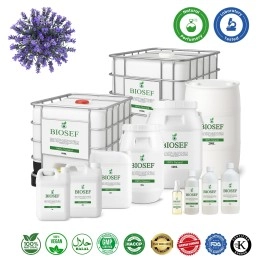


Cosmetics
Lavender hydrolate is among the most widely used hydrolates in cosmetics. It is used as the water phase of products and can replace part or all of the water in a formula. It is used in facial toners, face and body mists and micellar waters. It is added to creams, lotions, gels, masks and facial cleansing products. It suits shampoos, conditioners and hair sprays. It is used in aftershave products, deodorants and foot care products. The lavender scent is familiar and liked by many people, so it suits products for the whole family. In emulsions the hydrolate is added to the water phase. When the water phase is heated, part of the volatile substances is lost. Some producers therefore add the hydrolate after the emulsion has cooled, when the formula allows it. In gels the hydrolate is thickened with the usual thickeners, such as xanthan gum or carbomer. The hydrolate on its own is not a preserved product for cosmetics. Every product with a water phase must have a preservative system chosen and tested for that specific formula. Hydrolates usually have a slightly acidic pH, and in the formula it is adjusted to the needs of the product. In the European Union cosmetic products are governed by Regulation (EC) No 1223/2009. Every product must have a safety assessment prepared by a qualified specialist. Linalool is among the substances that can cause allergy. It is listed in the ingredients when its amount in the final product exceeds a set level. The small amounts of linalool from the hydrolate are also taken into account in the assessment. In the ingredient list the hydrolate is given with the INCI name Lavandula Angustifolia Flower Water. This name helps the buyer understand exactly what the product contains. The natural hydrolate is suitable for regular cosmetics. The organic hydrolate is suitable for products bearing an organic label, when the other ingredients also meet the standard. The hydrolate is stored in the fridge or in a cool, dark place, and clean equipment is used in production. We offer lavender hydrolate listed specifically for cosmetics.




Supplements
Hydrolates are sometimes used in food supplements as a flavouring or water ingredient. Lavender hydrolate can be part of liquid supplements, syrups and drops. In them it brings a soft floral flavour and can replace part of the water. In the European Union food supplements are governed by food law. They are notified to the competent authority in each country before they are placed on the market. The producer is responsible for the safety of the product. Every botanical ingredient must be permitted for use in supplements in the country concerned. Some countries have their own lists of permitted and restricted plants. The producer therefore checks the national rules before using the hydrolate. Hydrolate for supplements must be of food grade quality. Microbiological purity and the absence of contaminants are important. The certificate of analysis of the batch describes these parameters. Traceability is also mandatory, meaning it must be known from which field, which year and which distillation the hydrolate comes. The hydrolate is water, so shelf life must be ensured in a liquid supplement, for example by a preservative, pasteurisation or suitable packaging. The method is chosen by the technologist according to the type of product. Lavender easily gives a soapy taste when overdosed, so the amount is set by trials. It is important that the hydrolate comes from Lavandula angustifolia and not from lavandin. The full composition is stated on the label. Health claims that are not approved by law may not be made. The hydrolate is stored closed, cool and dark. The organic hydrolate is suitable for supplements bearing an organic label, when the whole chain is certified. We offer lavender hydrolate listed specifically for supplements.


Foods
Lavender has its place in the kitchen, especially in France. Its flowers go into some blends of herbes de Provence. They are used in cakes, biscuits, ice cream, chocolate, honey and syrups. Lavender hydrolate carries this flavour into food easily and evenly. It mixes directly with water, milk and syrups, and no emulsifier is needed. It is used in creams, icings, jellies, sorbets and fruit salads. It goes well with honey, lemon, strawberries, blueberries, peaches, white chocolate and vanilla. Lavender easily tastes soapy when overdosed. The amount is therefore set by trials, starting with a little. The hydrolate is added at the end of preparation, when the product has cooled. Cooking and baking drive off the volatile substances. In the European Union flavourings in foods are governed by Regulation (EC) No 1334/2008. The hydrolate can be used as a natural flavouring preparation when it meets the conditions. The technologist checks the composition of the batch and the rules in force. Hydrolate for foods must be of food grade quality and microbiologically clean. The batch must have a certificate of analysis and a clear origin. It is important that the hydrolate comes from Lavandula angustifolia and not from lavandin or other species with a more camphoraceous scent. The flavouring is stated on the food label according to the labelling rules. The organic hydrolate is suitable for organic foods. An opened pack is kept in the fridge and used quickly. Hydrolate that has turned cloudy or changed its smell is not used in foods. We offer lavender hydrolate listed specifically for foods.




Drinks
In drinks lavender hydrolate brings a delicate floral and herbal flavour. It mixes directly with water and does not make the drink cloudy, as can happen with the essential oil. Lavender lemonade is a familiar summer drink in many countries. The hydrolate is also used in sparkling drinks, iced teas, syrups and tonics. In iced teas it goes well with black and with green tea. In cocktails it is added in small amounts to gin, vodka or sparkling wine. Lavender is a well-known botanical in some gins. It goes well with lemon, grapefruit, blueberries, honey, mint and rosemary. In syrups the hydrolate can replace part of the water. In alcoholic drinks it is added when the distillate is reduced to the desired strength. At a lower alcohol strength cloudiness may appear, so trials are made. The amount is set by tasting, because lavender easily tastes soapy. The rules for flavourings in foods also apply to drinks. The technologist checks the batch documents and the limits in force. Hydrolate for drinks must be of food grade quality and microbiologically clean. Soft drinks with hydrolate are pasteurised or preserved according to the process. The finished drink is protected from strong light and heat so that it keeps its flavour. The certificate of analysis and traceability are mandatory. The flavouring is stated on the label according to the rules. The organic hydrolate is suitable for organic drinks. The hydrolate is stored cool and dark and used quickly after opening. We offer lavender hydrolate listed specifically for drinks.



Detergents
Lavender is one of the best-loved scents in household products. Lavender hydrolate is used as a fragrant water in such products. Its best known use is as ironing water and linen spray. It is also used in room fresheners and in sprays for cupboards and wardrobes. It is added as part of the water in liquid soaps and in surface, floor and bathroom cleaners. It is used in fabric softeners and laundry fragrance boosters. The scent of the hydrolate is weak, so in household products it is rarely the only fragrance. It is usually combined with lavender essential oil or with citrus oils. The oil gives the strength of the scent, and the hydrolate adds a soft floral background. An advantage of the hydrolate is that it is already water-based and mixes easily with the other ingredients. In ironing water the hydrolate must be clear and free of sediment. Before use in an iron the maker's instructions are checked, because some irons allow only distilled water. Before spraying on fabrics the hydrolate is tested in an inconspicuous spot. Products containing water need a preservative so that they do not spoil. The preservative is chosen according to the formula and the rules. Household products are subject to the rules on classification and labelling of chemical mixtures. The producer must hold the safety data for all ingredients. Linalool is stated on the label when its amount in the product exceeds a set level. The hydrolate is not flammable like essential oils, which makes storage easier. It is nevertheless kept away from heat and light, so that its scent and purity do not deteriorate. An opened pack is closed straight after use. We offer lavender hydrolate listed specifically for detergents.


Animals
Hydrolates are also used in animal care products. Lavender hydrolate is added mainly for its clean floral scent. It is used as the water phase in shampoos and conditioners for dogs and horses. It is added to coat sprays that make brushing easier and leave a light scent. It is also used in sprays for bedding, dog beds, cages, barns and stables. There the lavender scent masks unpleasant odours. The scent of the hydrolate is much weaker than that of the essential oil. Even so, animals have a far more sensitive sense of smell than people. Products are therefore not sprayed directly at the animal's muzzle and eyes. The animal must always be able to move away from the scented area. Cats are particularly sensitive to many plant substances. Products with hydrolates and essential oils are therefore not used on cats without the advice of a veterinarian. The hydrolate is not given to animals to drink and is not added to their food without the advice of a specialist. Animal products are subject to their own rules. Cosmetic products for animals, barn products and veterinary products have different requirements. The producer must know which group the product belongs to. The hydrolate in animal products also needs a preservative if the product is to be stored for a long time. A new product is first tried on a small area of the coat. The certificate of analysis and a clear origin matter here too. The hydrolate is stored closed and out of the reach of animals. At any unusual reaction of the animal, use of the product is stopped. We offer lavender hydrolate listed specifically for animal products, natural and organic.



Pharmaceuticals
Lavender is a well-known raw material in the pharmaceutical tradition of Europe. The European Pharmacopoeia has monographs on lavender oil and on lavender flower. The European Medicines Agency has prepared a monograph on the flower and the oil as traditional herbal medicinal products. These documents concern the flower and the oil, not the hydrolate. Hydrolates usually have no pharmacopoeia monograph of their own. The pharmaceutical producer therefore sets its own specification for the hydrolate. The specification describes appearance, odour, pH, microbiological purity and permitted contaminants. Every batch is checked against this specification before use. In pharmaceutical products the hydrolate can be a fragrant water phase in gels, creams, solutions and sprays. Every medicinal product must be authorised by the competent authority. Production follows the rules of good manufacturing practice. Quality documents are therefore mandatory. The certificate of analysis must be issued for the specific batch. Traceability of the raw material is part of the requirements. The producer must know where the plant comes from, how it was distilled and how the hydrolate was stored. It is important that the hydrolate comes from Lavandula angustifolia and not from lavandin, because their composition differs. The microbiological purity of the hydrolate is especially important, because it is a water-based product. Pharmaceutical producers often carry out their own analyses of each delivery. In storage the hydrolate is protected from light and heat, in closed containers. The amount of hydrolate in each product is set by the producer and approved when the product is authorised. No medical advice is given to the buyer of a raw material. We offer the raw material and its documents. We offer lavender hydrolate listed specifically for pharmaceuticals, natural and organic, from Bulgaria.




Ordering
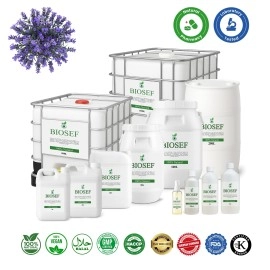
Lavender hydrolate can be ordered from a small sample up to larger pack sizes. We offer it natural and organic, from Bulgaria, listed separately for each of the uses above. We also offer lavender essential oil, natural and organic, CO2 total and CO2 select extracts, as well as lavender absolute, concrete and wax.